
The human body does not operate like a machine composed of rigid gears and levers. Instead, it functions like a complex orchestra, where every system, from the beating heart to the firing of neurons, relies on specific, recurring rhythms. Most people assume that physical progress requires force. They believe that a deeper stretch, a harder workout, or more intense pressure will yield faster results.
However, biology often interprets sudden force as a threat. When a stimulus feels aggressive, the nervous system triggers a protective “bracing” response, causing muscles to lock down rather than release.
To achieve lasting stability and recovery, one must speak the body’s native language: rhythm. By using cadence and predictable movement, you can bypass the brain’s defensive filters and invite the tissues to soften.
The Science of Biological Entrainment
Biological entrainment is the process by which two or more oscillating systems lock into a common phase. Your body is naturally prone to this. Think of how your breathing slows when you listen to a steady, calm beat, or how your gait naturally adjusts to the stride of a person walking beside you.
This isn’t just a mental shift; it is a systemic recalibration. When the body encounters a rhythmic, predictable touch, it begins to sync its internal state with that external input.
Force, by contrast, is often chaotic and unpredictable. When a manual intervention is too intense too quickly, it creates friction within the nervous system.
The brain sends a signal to the muscle spindles to contract, a mechanism known as the stretch reflex, which actually prevents the muscle from lengthening. This cadence signals to the brain that the environment is safe, allowing the deep structural layers to receive care without triggering a survival response.
Why Force Triggers the “Fight” in Fascia
Fascia, the connective tissue that weaves through your muscles and around your organs, is highly sensitive to the speed of impact. If you apply force too rapidly, the fascia behaves like a solid, resisting the pressure to protect the structures beneath it.
If you apply pressure with a slow, rhythmic quality, the fascia behaves more like a liquid, allowing for deeper penetration and more effective release.
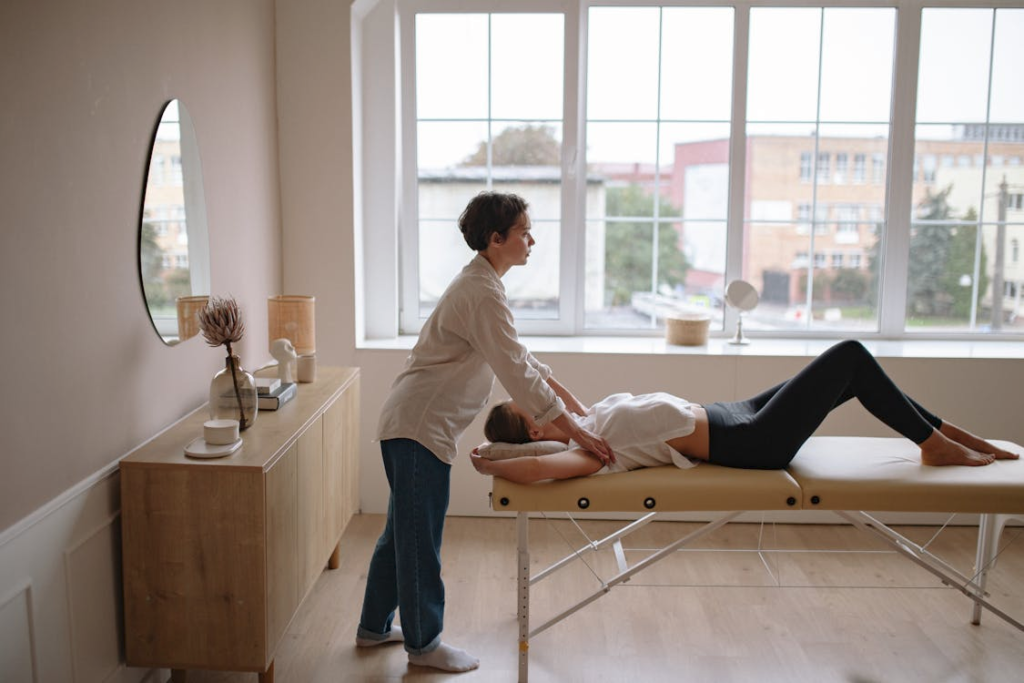
For individuals dealing with long-term stiffness, the instinct is often to “break through” the tension. Yet, the harder you push against a guarded body, the more the body pushes back. This is particularly relevant in senior massage therapy in Edmonton, where the tissues may be more delicate and the nervous system more sensitive to perceived threats.
By honouring the body’s natural speed and using rhythmic oscillations, a therapist can melt the “armour” of chronic tension without causing the inflammation or bruising that often follows aggressive force.
Rhythm as a Tool for Fluid Dynamics
The body’s fluid systems, blood and lymph, do not move in a straight line or at a constant pressure. They move in pulses. The lymphatic system, in particular, lacks a central pump like the heart. It relies entirely on rhythmic muscle contractions and external pressure to move waste away from the cells.
Because the lymphatic vessels are located just beneath the skin, they respond far better to a gentle, rhythmic touch than to heavy-handed force.
A lymphatic drainage massage utilizes light, repetitive strokes that mimic the natural pulse of the lymph vessels. This cadence encourages the “valves” within the vessels to open and close efficiently, reducing swelling and boosting immune function.
The Neurological Safety of Thai Massage
Certain traditional modalities have understood the power of rhythm for centuries. For instance, Thai massage in Edmonton incorporates a rocking motion that keeps the recipient in a state of constant, gentle movement. This technique does more than just move the joints; it occupies the nervous system with a consistent stream of “safety data.”
When the body is moved in a rhythmic, oscillatory fashion, the brain’s “threat detection” centre, the amygdala, begins to downshift. This allows for a deeper level of stretching that would otherwise be painful. The rhythmic nature of the work helps to reset the “tonus” of the muscles, meaning the baseline level of tension is lowered.
Breathing and the Internal Metronome
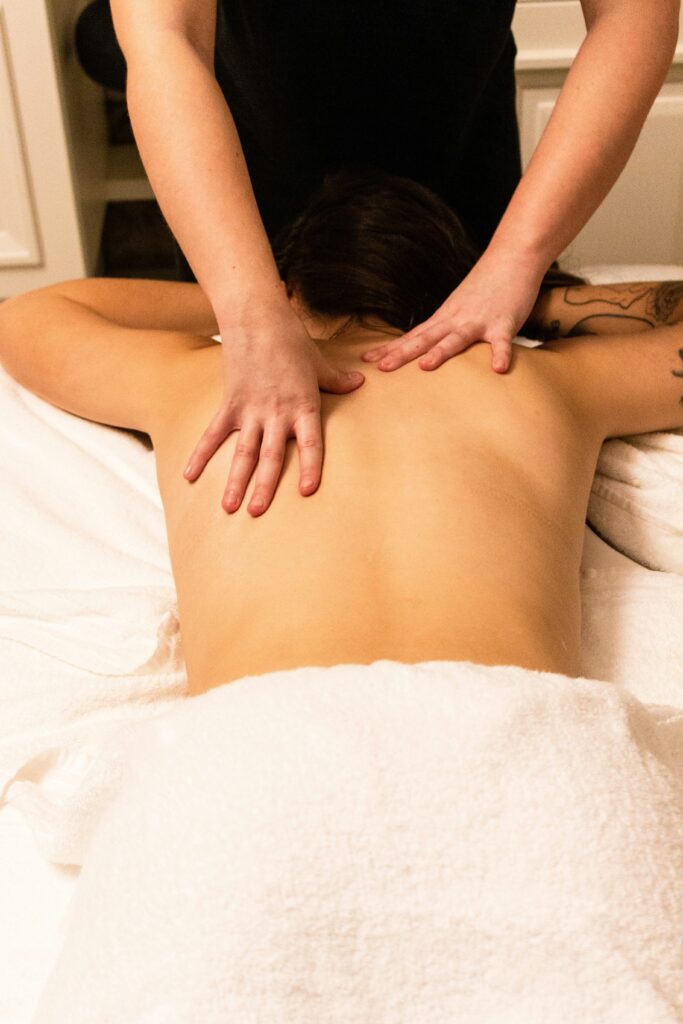
The most fundamental rhythm in the body is the breath. It serves as an internal metronome that dictates the state of the autonomic nervous system. Forceful, shallow breathing signals stress, while rhythmic, deep breathing signals recovery. In any therapeutic setting, the rhythm of the touch should ideally sync with the rhythm of the breath.
This synchronization creates a feedback loop of relaxation. As the breathing slows, the heart rate variability improves, and the muscles lose their “braced” quality. This is a core component of massage for stress relief.
By focusing on the cadence of the work, the therapist helps you transition from a state of high-alert force to one of rhythmic flow. This transition is where true healing occurs, as the body moves from “defending” to “mending.”
Restoring Your Natural Cadence at Healing Oasis Massage & Wellness
The modern world often demands force, more speed, more effort, and more intensity. At Healing Oasis Massage & Wellness, we believe your recovery should be the opposite. Our approach focuses on listening to your body’s unique rhythms and providing the gentle, consistent input needed to restore balance.
Our massage clinic in Edmonton is designed to be a sanctuary where the chaos of daily life is replaced by the healing power of cadence. Whether you are seeking a massage to address specific structural issues or a massage appointment to reset your stress levels, our skilled team is here to help you rediscover your natural flow.
Are you ready to stop fighting your body and start working with it? Experience the profound difference that rhythmic care can make. Contact us or book your session online today to reclaim your natural state of ease.
