Imagine you are sitting in a high-stakes board meeting or navigating a difficult conversation with a loved one. You believe your decisions stem from logic, data, and conscious thought. However, beneath the surface of your awareness, your body is casting the tie-breaking vote. Every tight muscle in your neck, the slight slouch in your spine, and the temperature of the air against your skin send a constant stream of data to your brain. This biological feedback loop dictates whether you feel confident enough to negotiate or too exhausted to care. Science calls this embodied cognition, the radical idea that the mind is not just housed in the body, but is fundamentally driven by it. Your physical state acts as a silent architect, building the framework for every mood you inhabit and every choice you make.
The Silent Boardroom: How Your Physical State Votes First
For decades, the traditional view of the human mind depicted the brain as a master computer and the body as a simple mechanical suit. Modern neuroscience has dismantled this hierarchy. We now understand that the relationship is a two-way street, often with the body leading the way.
When you experience physical tension, your brain does not just perceive “tightness”; it interprets that tightness as a signal of environmental threat.
If you carry chronic tension in your shoulders, your brain remains in a low-level state of “fight or flight.” This physical cue hijacks your decision-making system. You become more likely to perceive a neutral comment as a criticism or an achievable task as an overwhelming burden.
By the time you consciously decide to be “stressed,” your body has already been shouting that message to your nervous system for hours. This is why seeking a professional massage in Edmonton is more than a luxury; it is a vital recalibration of the signals your brain uses to interpret the world.
The Feedback Loop of the Flesh
The concept of proprioception, the sense of where your body is in space, plays a massive role in cognitive function. Research suggests that when you adopt a slumped posture, you actually find it harder to recall positive memories and easier to dwell on negative ones. Your brain looks for a reason to justify your physical stance. If you look defeated, your brain assumes you are defeated.

This feedback loop extends to your professional life. Physical discomfort acts as a “cognitive tax.” If you are distracted by the nagging pull of a knotted muscle, your prefrontal cortex—the area responsible for complex problem-solving- has fewer resources to dedicate to the task at hand. Your focus fractures because your body is demanding a resolution to its discomfort. When you resolve these physical interruptions through targeted back pain massage in Edmonton, you effectively “refund” that cognitive energy back to your brain, allowing for sharper focus and more creative thinking.
The Somatic Marker Hypothesis: Listening to Your Gut
Neuroscientist Antonio Damasio proposed the Somatic Marker Hypothesis, which suggests that “gut feelings” are actually physical manifestations of past experiences. When you face a choice, your body goes through a lightning-fast simulation of the potential outcomes. You might feel a slight tightening in your chest or a release of tension in your stomach.
These somatic markers guide you toward decisions that historically led to positive outcomes. However, if your body is constantly locked in a state of stress, these subtle “markers” get lost in the noise. You lose touch with your intuition because your physical “instrument” is out of tune. Maintaining a relaxed, receptive body ensures that these biological cues remain clear and reliable, rather than being muffled by the static of physical exhaustion.
The Vagus Nerve: The Body’s Information Superhighway
The vagus nerve is the longest nerve of the autonomic nervous system, stretching from the brainstem to the abdomen. It serves as the primary communication line for the “rest and digest” system. When the vagus nerve is stimulated through deep breathing or physical touch, it sends a signal to the brain that the environment is safe.
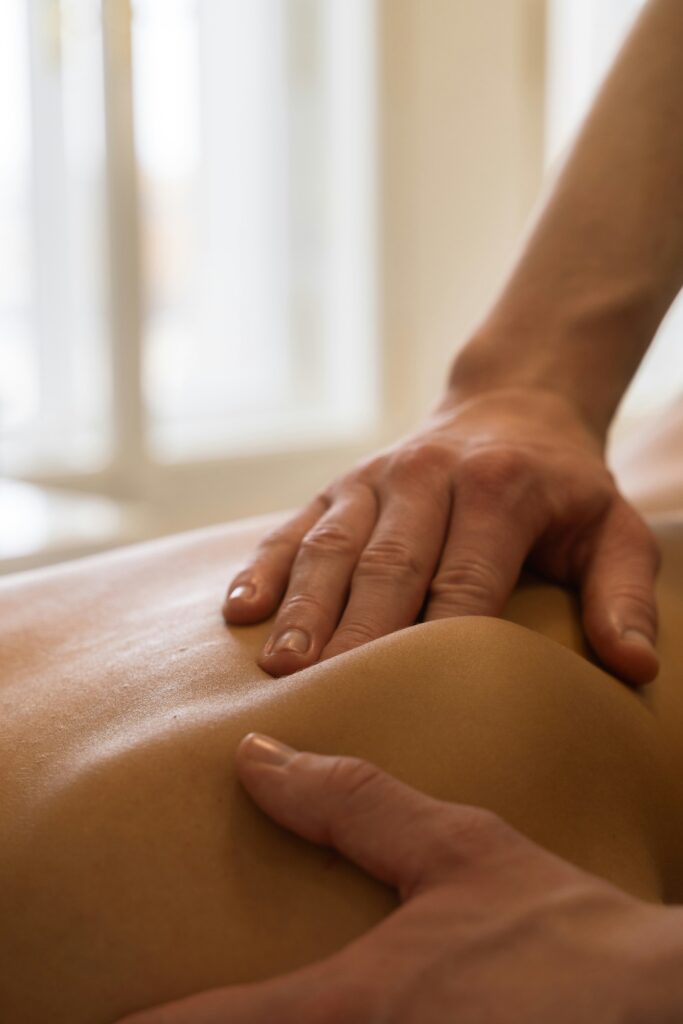
In a safe state, your perspective widens. You become more collaborative, more empathetic, and more capable of long-term planning. Conversely, a dormant or “low-tone” vagal response keeps you trapped in a narrow, survival-based mindset. Interventions like massage therapy for stress relief act as a direct manual override for this system. By physically soothing the tissues and calming the nervous system, you shift your biology from a state of defence to a state of growth. This shift isn’t just a feeling; it is a biological reality that alters the chemistry of your thoughts.
Why Comfort is a Catalyst for Creativity
Creativity requires a sense of psychological safety, but psychological safety cannot exist without physical ease. When you are physically comfortable, your brain enters the “alpha” wave state, which is associated with daydreaming and divergent thinking. This is why many people have their best ideas in the shower or during a walk, moments when the body is moving fluidly and without strain.
If your physical environment or your own body feels restrictive, your thoughts follow suit. You become rigid in your thinking. This is particularly relevant for those recovering from physical setbacks. Using a massage to address restricted movement doesn’t just help you move better; it helps you think bigger. It removes the physical boundaries that subconsciously tell your brain to “stay small” or “play it safe.”
Designing a Life of Intentional Ease
Understanding that the body drives behaviour allows you to stop fighting your mind and start supporting your biology. If you find yourself consistently making poor decisions or feeling stuck in a cycle of anxiety, the answer may not be “thinking harder.” Instead, the answer might lie in changing your physical state.
- Audit Your Posture:Every hour, check if your jaw is clenched or your shoulders are hiked. These small cues are “ordering” stress from your brain.
- Prioritize Physical Recovery:Treat recovery as a non-negotiable part of your cognitive strategy. A body that feels cared for is a body that produces a calm, capable mind.
- Movement as Medicine:Gentle stretching or professional therapy can break the “tension-anxiety” loop before it becomes a dominant mood.
Renewing Your Foundation at Healing Oasis Massage & Wellness
The journey toward mental clarity and emotional resilience begins with the physical self. At Healing Oasis Massage & Wellness, we recognize that your body’s comfort is the foundation of your life’s decisions. By addressing the physical cues that drive stress and fatigue, we help you reclaim control over your behaviour and your perspective.
Our massage clinic in Edmonton is dedicated to providing the specialized care needed to quiet the “background noise” of physical tension. Whether you are seeking massage therapy for stress relief or a specific treatment to improve your mobility, our team is here to support your total well-being. When you book an appointment, you aren’t just treating your muscles; you are investing in a clearer, more focused, and more empowered version of yourself.
Are you ready to change the conversation between your body and your brain? Contact us today or visit our website to schedule your session.
